In automotive systems, rubber seals are rarely noticed when they work — but they become impossible to ignore when they fail. A minor sealing weakness can lead to moisture ingress, corrosion, sensor malfunction, intermittent electrical faults, or complete connector failure. What makes field failures especially expensive is that they often appear months after launch, after thermal cycling, vibration, and real-world contamination have already done their damage.
Field reliability depends on a complete sealing system — not just a rubber part. That includes the seal, the housing, tolerances, assembly process, and validation approach. This guide focuses on the most common failure drivers across automotive connector seals, wire seals, rubber gaskets, O-rings, and other molded components used in harsh vehicle environments.
If you’re building an internal knowledge base, you may also want to read our related guides on automotive connector seals, rubber compound selection, O-ring manufacturing, and automotive grommets.
Key Takeaway
Most field failures are not caused by “bad rubber.” They are usually caused by a mismatch between the seal design/compound and the real service environment — plus small manufacturing or validation gaps that reduce sealing margin over time.
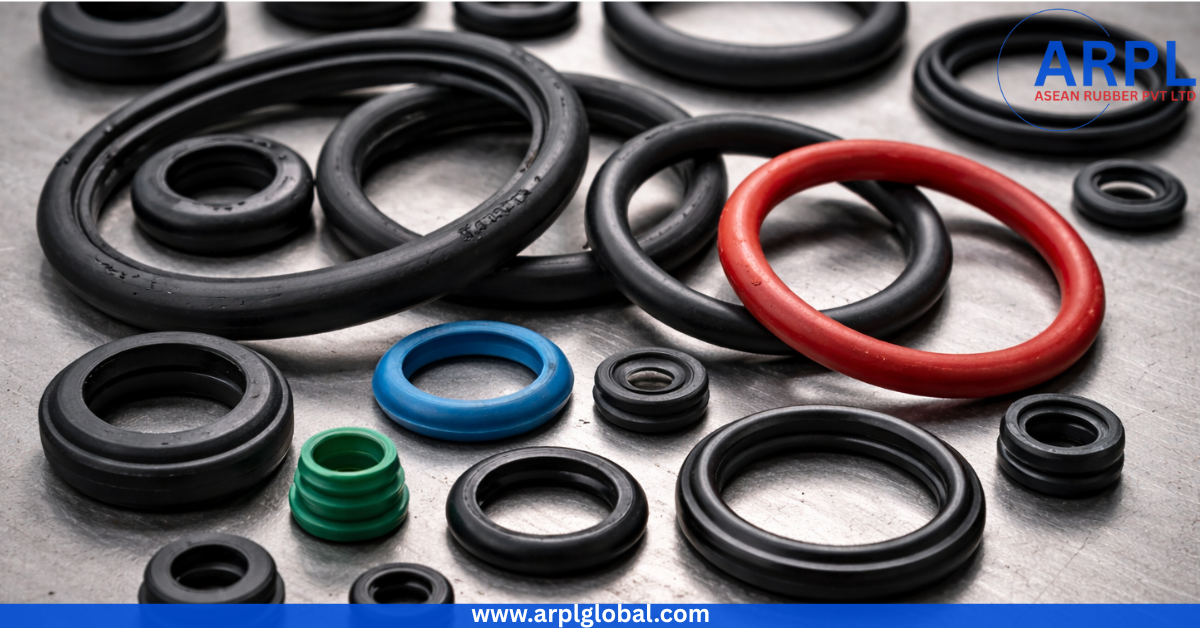
Why Field Failures Happen Even When Parts Look “Perfect”
Many seals pass incoming inspection and still fail in service. That’s because field conditions combine multiple stressors at the same time: temperature cycling, vibration, assembly variation, contaminants, pressure differentials, and chemical exposure. If your sealing system has low design margin, even a small deviation can push it into leakage.
Before we go into the seven causes, remember one practical truth: sealing is a system. It’s not just the rubber. It’s the rubber + housing tolerances + squeeze window + surface finish + flash control + assembly process. The same principle applies across products like rubber grommets, rubber bellows, rubber caps, and rubber bushings.
1) Wrong Material for the Real Service Environment
The most common root cause is a mismatch between the elastomer compound and what the seal actually experiences in the field. A compound that is excellent in one environment can degrade rapidly in another — especially in sealing applications that face oil mist, coolant splash, ozone, road salts, vibration, and heat.
If you want a structured material selection approach, start with: Choosing the Right Rubber Compound for Automotive Seals.
Material mismatch examples that cause failures
- EPDM used where oil or fuel exposure exists (swelling, softening, property drop).
- NBR used in high ozone / outdoor environments without protection (cracking over time).
- Silicone used where tear strength and abrasion resistance are critical (handling/assembly damage).
- FKM selected without checking low-temperature elasticity needs (loss of flexibility at cold conditions).
Material selection impacts every sealing category, including connector seals, wire seals, and gaskets.
2) Compression Set Reduces Contact Pressure Over Time
Many seals rely on a controlled squeeze to maintain contact pressure. Over time, heat and sustained compression can cause permanent deformation — known as compression set. When compression set increases, contact pressure drops and micro-gaps form along the sealing path.
What this looks like in the field
- Connector seals that pass initial IP tests but start leaking after months.
- Moisture ingress during pressure washing or monsoon conditions.
- Intermittent failures due to corrosion at terminals.
Practical check
Always validate compression set after heat ageing at the real service temperature (or a realistic worst-case). If the seal loses its “spring,” the sealing margin collapses.
3) Tooling & Parting Line Issues Create Leakage Paths
Even if the compound is correct, leakage can occur if the parting line and flash are not controlled. In connector sealing, a small flash line can prevent uniform contact or create a channel where water migrates. Similar risks exist for precision parts like O-rings and gaskets, where sealing faces must remain clean and consistent.
Typical tooling-related issues
- Flash in critical sealing areas (especially around ribs or lips).
- Parting line running across a sealing ridge.
- Non-uniform shrinkage causing geometry distortion.
- Insufficient venting leading to short shots or surface defects.
For sealing-critical components, dimensional and visual quality gates must focus on the functional sealing surfaces — not just overall OD/ID measurements.
4) IP67/IP68 Validation Done in “Easy Mode”
IP tests can be misleading if they are not designed to reflect real assembly and real tolerances. A connector can pass a controlled test while still failing in vehicles due to vibration, cable pull, or housing variation.
Common IP validation gaps
- Testing a “golden sample” housing, not production tolerance extremes.
- Testing static assemblies without vibration or movement.
- Ignoring cable routing strain that changes connector alignment.
- Testing one-time, not after thermal cycling and ageing.
If you’re working on connector sealing, read: The Complete Guide to Automotive Connector Seals and explore our connector seal product range.
5) Cost-Driven Compound Changes Without Revalidation
Small formulation changes — even if the polymer remains the same — can significantly affect performance: compression set, tear strength, permeability, and ageing behavior. Field failures often trace back to a “minor” change made to reduce cost or improve processing.
Examples of changes that can impact performance
- Plasticizer level changes affecting hardness drift over time.
- Filler system changes affecting resilience and compression set.
- Cure system changes affecting long-term ageing and heat resistance.
- Pigment additions affecting cure or contamination sensitivity (in silicone systems).
Rule of thumb
If the compound recipe changes, revalidate the sealing performance. A seal is not a “commodity rubber part” — it is a reliability component.
6) Process Variation: Cure, Mixing, and Dimensional Stability
Inconsistent manufacturing controls lead to batch-to-batch variation. Even within acceptable hardness limits, cure state differences can change compression set, tensile, and sealing recovery. For high-volume applications, stable mixing and cure control are essential.
What to control tightly
- Compound mixing consistency (dispersion, temperature control, mixing time).
- Rheology control (scorch safety and cure characteristics).
- Molding temperature and cure time consistency.
- Deflashing methods that do not damage sealing lips or edges.
This matters across products including O-rings, gaskets, grommets, and bellows.
7) No Feedback Loop from Field to Design
Sealing performance improves fastest when field feedback is captured, analyzed, and fed into the next design/validation cycle. Without this, the same failure modes repeat across platforms and product generations.
High-reliability approach
- Document failure mode clearly (leak path, assembly condition, environment).
- Separate material failure vs. geometry/tolerance failure.
- Update validation plans to include the conditions that caused the failure.
- Improve squeeze window and sealing margin (design for variation).
For sourcing or development support across sealing products, see our full product catalogue.
Conclusion
Most automotive rubber seal failures are preventable. The highest-impact improvements usually come from three areas: selecting the correct compound for the real environment, maintaining sealing margin over time (especially compression set), and validating the complete system under realistic tolerances and conditions.
If you’re developing connector seals, wire seals, gaskets, O-rings, or custom molded parts, a structured approach to material selection, tooling control, and validation reduces field risk significantly — and protects your reliability targets.
Need Support on Sealing Design or Material Selection?
Share your application conditions (temperature, media exposure, IP target, housing details) and our team can help you select the right elastomer and build a validation approach that reduces field failures.
Request Engineering SupportWhat is the most common reason automotive rubber seals fail in the field?
The most common cause is material mismatch — selecting a compound that does not match the real service environment (temperature, oil/fuel exposure, ozone/weathering, compression requirements). Even if a seal passes initial inspection, long-term ageing and real-world stress can cause loss of sealing pressure and leakage.
How does compression set cause connector seal leakage?
Compression set is the permanent deformation of a seal after being compressed over time, especially under heat. As compression set increases, the seal loses recovery and contact pressure drops, creating micro-gaps along the sealing path. This can lead to moisture or dust ingress and eventual connector leakage.
Why do seals pass lab tests but fail in real vehicles?
Field conditions combine temperature cycling, vibration, assembly variation, and contaminants simultaneously. Lab tests are often performed under controlled conditions and may not represent tolerance extremes or dynamic stresses. Robust validation should include realistic housings, production-like stack-ups, ageing, and real IP testing conditions.