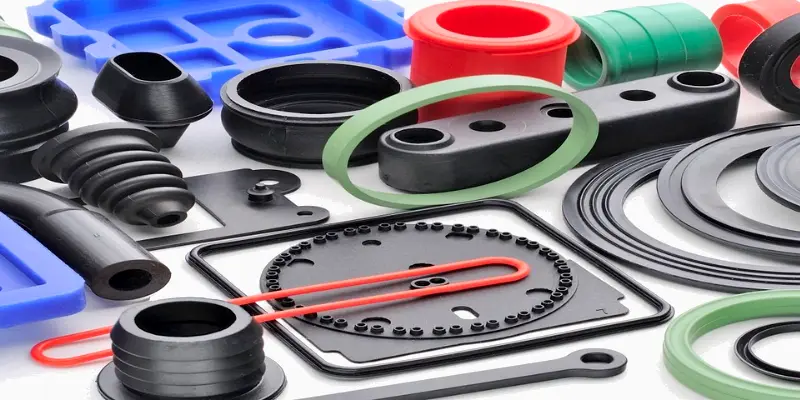
IP67 Seals & Gaskets
ARPL manufactures IP67 and IP68 rated seals and gaskets — dust-tight and waterproof sealing solutions for EV battery pack enclosures, electronics housings, connectors, junction boxes, EV chargers, and outdoor equipment. We mold and die-cut gaskets in silicone, silicone sponge, EPDM, neoprene, and fluorosilicone with low compression set for long-term sealing performance under IEC 60529 ingress protection requirements.
IP67 Seal & Gasket Types
IP67 & IP68 Seals for Dust-Tight and Waterproof Protection
Ingress Protection (IP) ratings defined by IEC 60529 specify the level of sealing effectiveness against dust and water. IP67 — the most commonly specified rating for automotive and industrial electronics — requires complete dust-tight protection (level 6) and protection against temporary water immersion up to 1 meter depth for 30 minutes (level 7). IP68 extends this to continuous submersion at manufacturer-specified depths and pressures.
ARPL designs and manufactures gaskets that enable enclosures to achieve and maintain IP67/IP68 ratings throughout the product lifecycle. Our sealing solutions use low-durometer, low-compression-set materials that conform to housing surface irregularities and maintain seal integrity under thermal cycling, vibration, UV exposure, and chemical contact — the real-world conditions that challenge sealing performance long after initial assembly.
Products We Manufacture
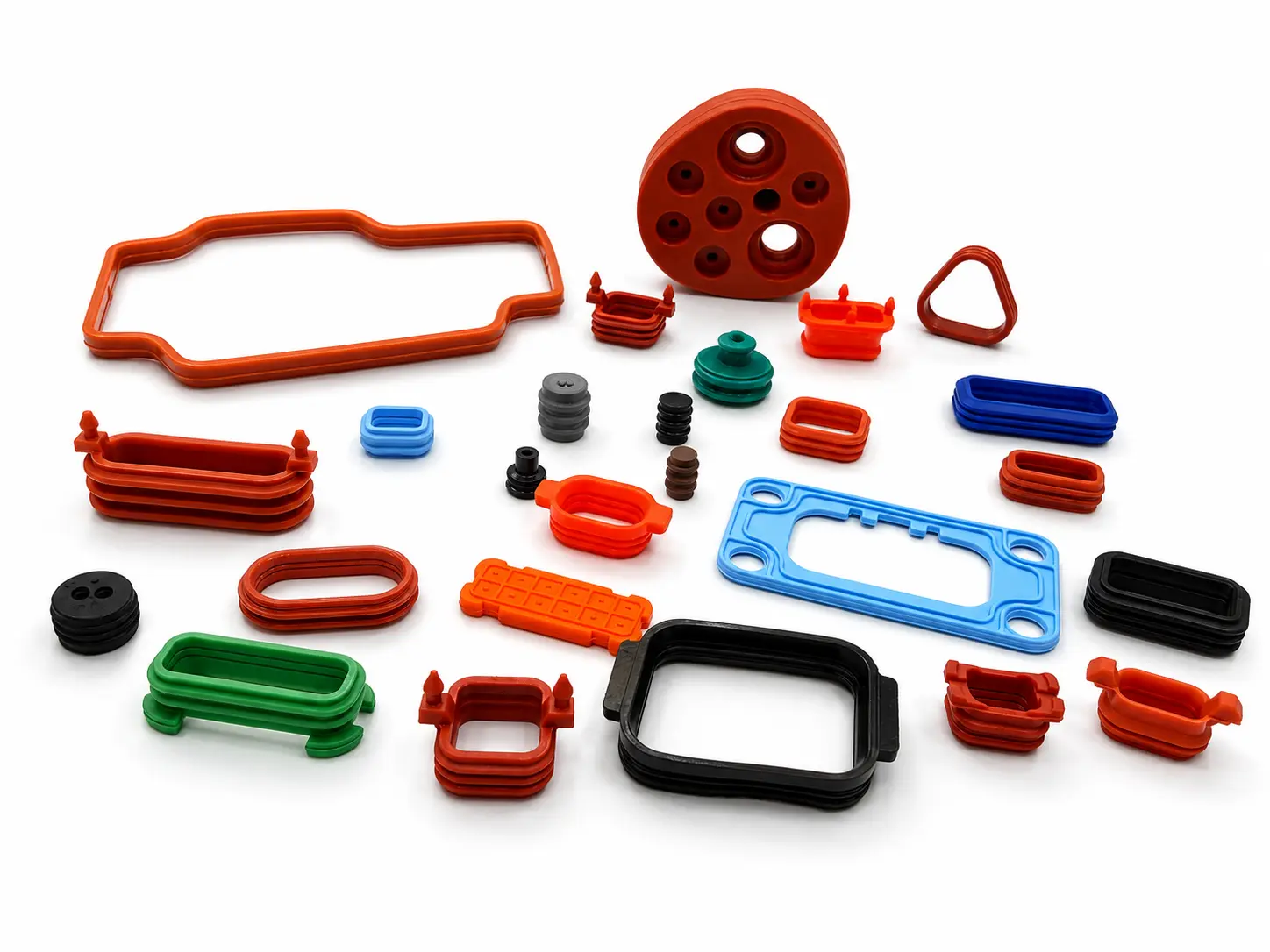
- Enclosure perimeter gaskets — continuous seal gaskets for battery pack housings, electronics enclosures, and junction boxes with molded sealing beads for reduced clamp force
- Connector & cable entry seals — radial seals for cable glands, connector pass-throughs, and wire entry points that maintain IP67 while allowing cable routing
- Cover & lid gaskets — flat gaskets and profiled seals for access panels, service covers, and inspection hatches on enclosures and battery packs
- Form-in-place gaskets (FIPG) — dispensed silicone or polyurethane gaskets cured directly in the housing groove for automated high-volume production
- Adhesive-backed gaskets — die-cut gaskets with PSA backing for peel-and-stick installation on enclosure flanges and cover plates
- Custom molded IP seals — compression and injection molded seals with complex cross-sections, integrated sealing lips, and multi-material constructions
Why Choose ARPL for IP67 Seals
- ISO 9001:2015 certified — controlled molding processes with dimensional verification and compression set testing
- Application-matched materials — silicone, EPDM, neoprene, fluorosilicone, and silicone sponge selected for your environment
- Low compression set — compound and cross-section optimization for seal performance over product lifetime
- In-house tooling — CNC & EDM tool rooms for rapid prototype-to-production mold development
- Global supply — exporting to USA, Germany, UK, Japan, South Korea, UAE and 15+ countries
- 30+ years experience — established 1993, serving automotive OEMs and Tier-1 suppliers
Gasket Materials & Sealing Capabilities
Achieving IP67 depends on the complete enclosure system — housing rigidity, fastener spacing, gasket material, cross-section design, and compression control. ARPL selects the right gasket material and profile to meet your IP rating while accounting for the real-world conditions your product will face.
Gasket Material Options
- Solid Silicone / VMQ (-60°C to +230°C) — the preferred material for IP67 sealing. Available in 10-70 Shore A for low clamp force, excellent compression set resistance, and stable performance across extreme temperatures. UV, ozone, and weathering resistant.
- Closed-Cell Silicone Sponge (-55°C to +200°C) — ultra-soft, highly compressible foam for sealing uneven surfaces and wide tolerance ranges. Very low clamp force requirement. Ideal for plastic housings that flex between fasteners.
- EPDM (-50°C to +150°C) — excellent weather, UV, and ozone resistance at lower cost than silicone. Widely used for outdoor enclosures, junction boxes, and automotive housings.
- Neoprene / CR (-35°C to +120°C) — oil and moderate flame resistance for industrial enclosures exposed to oils and solvents. Good balance of sealing and chemical resistance.
- Fluorosilicone / FVMQ (-55°C to +200°C) — combines silicone's temperature range with fuel and oil resistance. Used where IP67 sealing must coexist with hydrocarbon exposure.
- TPE (-40°C to +120°C) — cost-effective for high-volume consumer electronics and appliance enclosures with moderate temperature requirements.
Critical Sealing Design Factors
- Compression set — the gasket must maintain sealing force over years of service. Low compression set (below 15-25%) is essential for long-term IP67 reliability.
- Durometer / hardness — softer gaskets (10-30 Shore A) conform to surface irregularities and seal at lower clamp pressures, critical for thin-wall plastic housings.
- Cross-section profile — molded sealing beads, D-profiles, and P-profiles concentrate sealing pressure and reduce the total clamp force needed.
- Fastener spacing — closer fasteners provide more uniform gasket compression and prevent housing bowing between bolt points.
- Housing rigidity — flexible housings require softer gaskets and closer fasteners to prevent seal gaps under water pressure or mechanical load.
IP67 Gasket Material Comparison
| Material | Temp. Range | Compression Set | UV / Ozone | Chemical | Typical Application |
|---|---|---|---|---|---|
| Solid Silicone | -60 to +230°C | Excellent | Excellent | Good | EV battery packs, electronics, medical |
| Silicone Sponge | -55 to +200°C | Good | Excellent | Good | Plastic enclosures, charging ports |
| EPDM | -50 to +150°C | Good | Excellent | Fair | Junction boxes, outdoor enclosures |
| Neoprene (CR) | -35 to +120°C | Fair | Good | Good (oil) | Industrial panels, motor enclosures |
| Fluorosilicone | -55 to +200°C | Good | Excellent | Excellent | Fuel systems, aerospace, oil exposure |
| TPE | -40 to +120°C | Fair | Fair | Fair | Consumer electronics, appliances |
Note: IP67 performance depends on the complete enclosure system, not just the gasket material. Contact ARPL's sealing engineers for design review and material selection based on your specific housing, environment, and lifecycle requirements.
IP67 Seal & Gasket Applications
ARPL's IP67 seals and gaskets protect sensitive electronics, battery systems, and equipment from dust, moisture, and environmental contamination across EV, automotive, telecom, industrial, and marine applications.
EV Battery Pack Enclosures
Battery pack housings require IP67 sealing to protect lithium-ion cells from moisture ingress that can cause short circuits, corrosion, and thermal events. ARPL manufactures perimeter gaskets for battery pack lids, service cover seals, coolant port seals, and cable entry glands in flame-retardant silicone and EPDM. Our gaskets maintain IP67 integrity through years of thermal cycling (-40°C to +60°C ambient), vibration, and road splash exposure.
EV Chargers & Charging Ports
AC and DC charging stations operate outdoors in rain, snow, dust, and extreme temperatures. Charging port lids, connector interfaces, and electronics enclosures all require IP67 sealing. ARPL supplies silicone sponge gaskets for charging port covers, molded connector seals for CCS and CHAdeMO interfaces, and enclosure gaskets for charger electronics housings.
Electronics & Sensor Housings
ADAS cameras, LiDAR units, radar modules, ECUs, and sensor enclosures require IP67 protection to function reliably in automotive and outdoor environments. ARPL manufactures thin-profile gaskets in soft silicone (10-30 Shore A) that seal at the low clamp forces compatible with plastic housings and small fastener patterns, maintaining IP67 without distorting the enclosure.
Junction Boxes & Outdoor Equipment
Electrical junction boxes, solar inverter enclosures, telecom cabinets, and outdoor lighting fixtures require dust-tight and waterproof sealing for years of unattended outdoor operation. ARPL supplies EPDM and silicone perimeter gaskets, cable gland seals, and adhesive-backed gaskets for IP67 junction boxes and outdoor enclosures across solar, telecom, and industrial markets.
Marine & Submersion Applications
Underwater cameras, marine electronics, subsea connectors, and dive equipment require IP68 gaskets that withstand continuous submersion pressure. ARPL supplies molded silicone and fluorosilicone seals designed for IP68 with controlled compression and low-durometer compounds that maintain seal integrity under hydrostatic pressure at depth.
Global Export Markets
ARPL exports IP67 seals and gaskets from India to OEMs and Tier-1 suppliers in the USA, Germany, UK, France, Italy, Japan, South Korea, Taiwan, UAE, Saudi Arabia, Turkey, Canada, Mexico, and Sweden. All exports comply with REACH, RoHS, and destination country regulations.
Request a Quote
Get a custom quote for your IP67 sealing requirements
Related Products

Frequently Asked Questions
Find answers to common questions about IP67 seals and gaskets
IP67 is an Ingress Protection rating defined by IEC 60529. The first digit (6) means the enclosure is completely dust-tight — no dust particles can enter. The second digit (7) means protection against temporary water immersion up to 1 meter depth for 30 minutes. IP67 gaskets must maintain this level of sealing throughout the product's intended lifecycle under real-world temperature, vibration, and aging conditions.
Both IP67 and IP68 provide level 6 dust protection (dust-tight). The difference is water resistance: IP67 protects against temporary immersion up to 1 meter for 30 minutes, while IP68 protects against continuous submersion beyond 1 meter at depths and durations specified by the manufacturer. IP68 requires gaskets with even lower compression set, tighter groove tolerances, and often harder housing materials to resist hydrostatic pressure without seal gap formation.
ARPL uses solid silicone rubber (10-70 Shore A) for the widest temperature range and lowest compression set, closed-cell silicone sponge for ultra-soft sealing on flexible housings, EPDM for cost-effective outdoor weather resistance, neoprene for oil-exposed industrial environments, fluorosilicone for fuel and chemical contact, and TPE for high-volume consumer applications. Material selection is based on temperature, environment, sealing pressure, and lifecycle requirements.
Yes. ARPL manufactures perimeter gaskets for battery pack lids, service cover seals, coolant port seals, cable entry glands, and BMS housing gaskets in flame-retardant silicone and EPDM. Our gaskets are designed for IP67/IP68 integrity through years of thermal cycling (-40°C to +60°C), vibration, and road splash exposure with low compression set.
Compression set measures how much a gasket permanently deforms after being compressed over time. High compression set means the gasket loses its ability to spring back and maintain sealing pressure, eventually allowing dust and water to pass. For long-life IP67 applications, gaskets need compression set below 15-25% — silicone rubber excels at this with compression set values typically under 15% after 72 hours at 150°C.
Yes. ARPL manufactures custom IP67 gaskets via compression molding for profiled cross-sections, die-cutting from sheet stock for flat gaskets, and adhesive-backed gaskets for peel-and-stick assembly. We work from 2D drawings, 3D models, or physical samples and support prototype through series production with in-house CNC tooling.
Please share: enclosure drawing or gasket groove dimensions, target IP rating (IP67/IP68), housing material (aluminum, plastic, steel), operating temperature range, environmental exposure (outdoor, marine, chemical), gasket material preference, flame retardancy requirements, adhesive backing needed, and annual volume estimate.
Yes. ARPL exports IP67 seals and gaskets globally to USA, Germany, UK, France, Italy, Japan, South Korea, Taiwan, UAE, Saudi Arabia, Turkey, Canada, Mexico, Sweden, and Netherlands. All exports comply with REACH, RoHS, and destination country regulations.