Rubber Dampers & Cushioning Pads
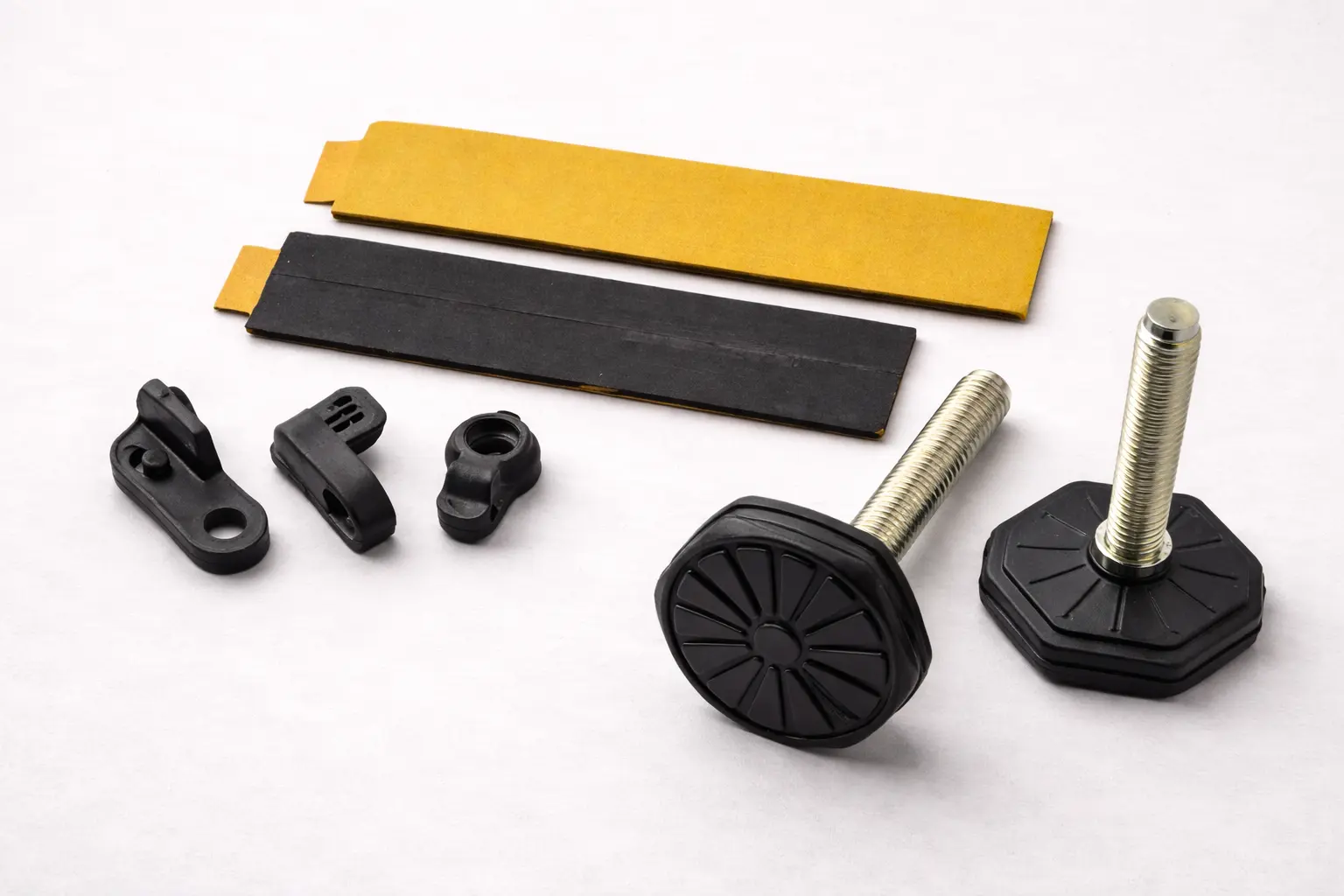
ARPL manufactures custom rubber dampers, cushioning pads, anti-vibration mounts, bump stops and NVH isolation components for EV battery packs, automotive powertrains, industrial machinery, and rail transport. We mold dampers in NR, EPDM, Neoprene, Silicone and NBR compounds — including rubber-to-metal bonded configurations for engine mounts, sandwich mounts and cylindrical bobbins.
Damper & Cushioning Pad Types
Rubber Dampers & Cushioning Pads for Vibration Control & NVH Management
ARPL manufactures rubber dampers and cushioning pads engineered to absorb vibrations, isolate shock, reduce noise, and protect sensitive assemblies from mechanical stress. Our damping solutions serve EV battery modules, automotive powertrain systems, industrial equipment, and rail vehicles — wherever reliable NVH control and vibration isolation are critical to product performance and durability.
Rubber dampers work by converting kinetic energy into heat through hysteresis in the elastomer, reducing the amplitude of vibrations transmitted between components. Cushioning pads provide controlled compression to hold components in place, absorb impact energy, and maintain consistent clamping force over the product lifecycle. ARPL engineers the right compound, geometry, and hardness for your specific frequency range, load, and environmental conditions.
Products We Manufacture
- Vibration damper pads — flat, ribbed, and waffle-profile pads for machinery isolation and equipment mounting
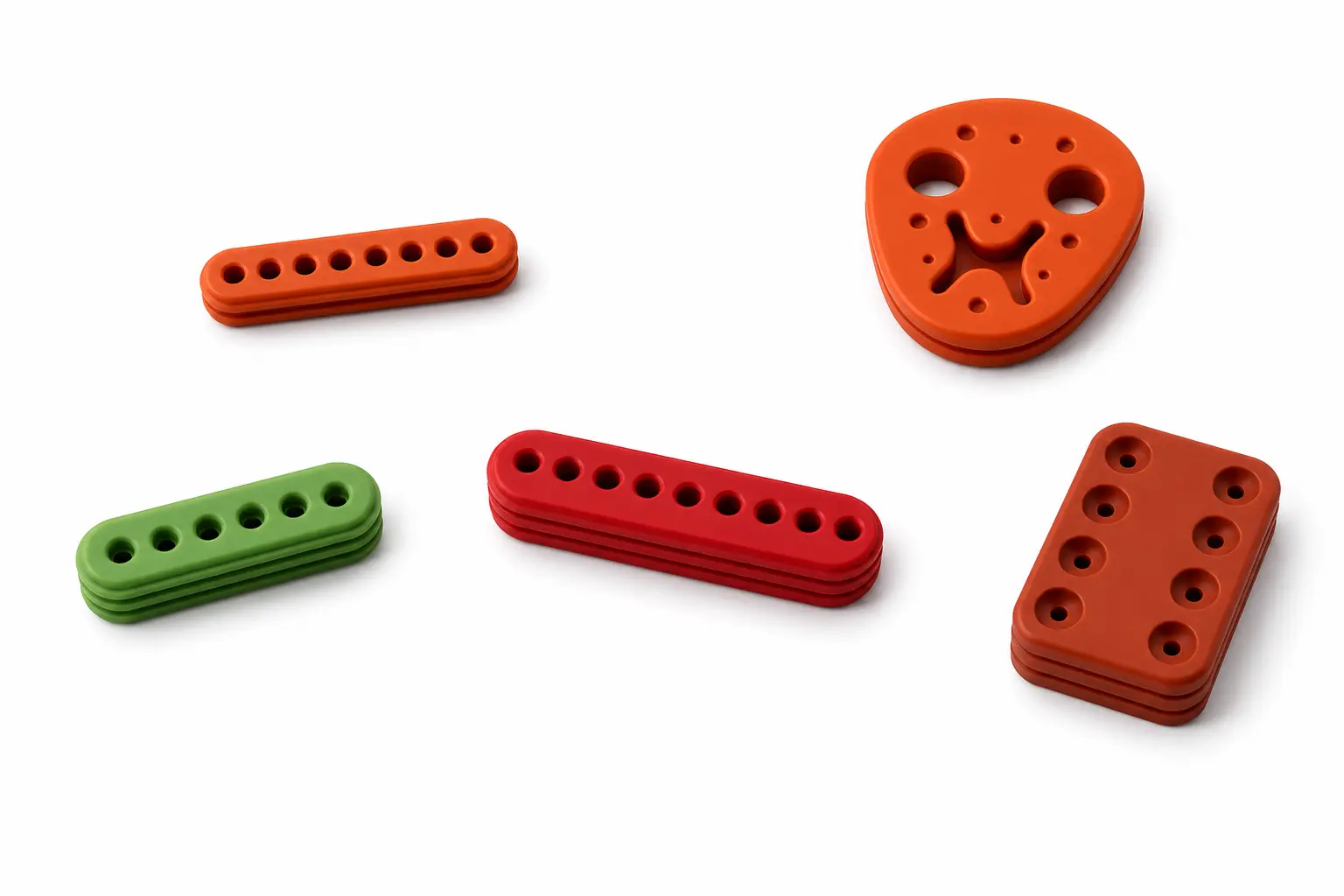
- Cushioning & compression pads — cell-to-cell and cell-to-end pads for EV battery modules and pouch cell assemblies
- Anti-vibration mounts — cylindrical bobbins, conical mounts, sandwich mounts, and engine/motor mounts
- Bump stops & buffers — suspension bump stops, jounce bumpers, and progressive-rate rubber buffers
- Shock & vibration isolators — multi-axis isolators for sensitive electronics, inverters, and onboard chargers
- Rubber-to-metal bonded mounts — steel/aluminum bonded dampers for structural mounting and load-bearing isolation
Why Choose ARPL for Dampers & Cushioning Pads
- ISO 9001:2015 certified — full dimensional traceability and compound batch control
- In-house tooling — CNC & EDM tool rooms for rapid prototype-to-production turnaround
- Rubber-to-metal bonding — in-house bonding capability for structural mounts and isolators
- Wide compound range — NR, EPDM, CR, Silicone, NBR, PU and custom blends for specific NVH targets
- Global supply — exporting to USA, Germany, UK, Japan, South Korea, UAE and 15+ countries
- 30+ years experience — established 1993, serving automotive OEMs and Tier-1 suppliers
Material & Manufacturing Capabilities
We engineer rubber dampers and cushioning pads with compound selection, hardness tuning, and geometry optimization tailored to your specific vibration frequency, load, temperature, and environmental exposure requirements.
Material Options for Dampers & Cushioning Pads
- Natural Rubber / NR (-40°C to +80°C) — highest resilience and elasticity. Best vibration damping at low frequencies. Ideal for engine mounts, suspension bumps, and general-purpose vibration isolation.
- EPDM (-50°C to +150°C) — excellent weather, ozone, and UV resistance. Suited for outdoor equipment, HVAC isolation, and EV battery pack cushioning exposed to environmental cycling.
- Neoprene / CR (-35°C to +120°C) — balanced oil resistance, flame resistance, and damping. Used for industrial machinery mounts and equipment exposed to moderate oil and fuel splash.
- Silicone / VMQ (-60°C to +200°C) — widest temperature range. Low compression set. Used for EV inverter cushioning, high-temperature motor mounts, and aerospace isolation pads.
- Nitrile / NBR (-30°C to +120°C) — good oil and fuel resistance. Suited for dampers in powertrain and transmission environments with petroleum-based fluid exposure.
- Polyurethane / PU (-30°C to +80°C) — highest abrasion resistance and load-bearing capacity. Used for heavy machinery pads, high-load buffer applications.
What We Optimize For
- Vibration isolation — compound and geometry tuned for target frequency range and transmissibility reduction
- NVH performance — noise, vibration, and harshness control for automotive passenger comfort
- Compression set resistance — low creep for long-term clamping force in battery cushioning applications
- Dynamic fatigue life — engineered for millions of load cycles in automotive and rail environments
- Rubber-to-metal bonding — adhesive-primed steel and aluminum bonding for structural mounts
Damper Material Comparison
| Material | Temp. Range | Resilience | Best For | Chemical Resistance | Typical Application |
|---|---|---|---|---|---|
| Natural Rubber | -40 to +80°C | Very High | Low-frequency vibration damping | Poor vs. oils, good vs. water | Engine mounts, suspension bumps |
| EPDM | -50 to +150°C | High | Weather-resistant damping | Good vs. water, UV, ozone | Outdoor equipment, EV battery pads |
| Neoprene (CR) | -35 to +120°C | Medium | Oil + flame resistant damping | Moderate vs. oils, good vs. ozone | Industrial machinery, equipment mounts |
| Silicone | -60 to +200°C | Medium | Extreme temperature isolation | Good vs. UV, ozone, water | EV inverter pads, aerospace isolators |
| NBR | -30 to +120°C | Medium | Oil-environment damping | Good vs. oils, fuels | Powertrain mounts, transmission dampers |
| Polyurethane | -30 to +80°C | High | High-load bearing | Moderate vs. oils, good abrasion | Heavy machinery pads, high-load buffers |
Note: Temperature ranges and properties are general guidelines. Actual performance depends on compound formulation, hardness, geometry, and application conditions. Contact our engineering team for specific recommendations.
Damper & Cushioning Pad Applications
ARPL's rubber dampers and cushioning pads serve applications across electric vehicles, automotive, industrial machinery, and rail transport wherever vibration isolation, shock absorption, and NVH management are essential.
Electric Vehicle (EV) Applications
EV battery modules require cushioning pads between cells (cell-to-cell) and at module boundaries (cell-to-end) to absorb vibration, maintain cell alignment, and protect against road-induced shock. Battery pack mounting requires vibration isolators that decouple the pack from the vehicle chassis. Motor mounts for electric drivetrains must handle high torque loads while isolating high-frequency motor whine. ARPL supplies compression pads, isolation mounts, and rubber-to-metal bonded dampers for these critical EV applications.
Automotive Powertrain & Chassis
Engine mounts, transmission mounts, exhaust hangers, suspension bump stops, and body isolation bushings all rely on precisely tuned rubber compounds to control NVH and protect drivetrain components. ARPL manufactures rubber-to-metal bonded engine mounts, progressive-rate bump stops, and custom vibration isolators for automotive OEMs and Tier-1 suppliers with compound selection matched to the specific vibration profile and fluid environment.
Industrial Machinery & Equipment
Compressors, generators, CNC machines, pumps, fans, and HVAC equipment generate vibrations that must be isolated from building structures and adjacent equipment. ARPL supplies anti-vibration mounting pads, machine foot isolators, and custom damper assemblies in NR, EPDM, and Neoprene compounds rated for the specific load, frequency, and environmental conditions of each installation.
Rail Transport & Heavy Equipment
Rail vehicles use rubber dampers for bogie suspension, traction motor mounting, and cab isolation. Construction and mining equipment require heavy-duty buffer pads and shock mounts for operator protection. ARPL supplies railway-grade rubber damper pads, chevron springs, and high-load vibration isolators engineered for long service life under severe dynamic loading conditions.
Global Export Markets
ARPL exports rubber dampers and cushioning pads from India to OEMs and Tier-1 suppliers in the USA, Germany, UK, France, Italy, Japan, South Korea, Taiwan, UAE, Saudi Arabia, Turkey, Canada, Mexico, and Sweden. All exports comply with REACH, RoHS, and destination country regulations.
Request a Quote
Get a custom quote for your rubber damper and cushioning pad requirements
Related Products

Frequently Asked Questions
Find answers to common questions about rubber dampers and cushioning pads
Rubber dampers and cushioning pads are elastomeric components designed to absorb vibrations, isolate shock, reduce noise (NVH), and protect sensitive assemblies from mechanical stress. They work by converting kinetic energy into heat through hysteresis in the rubber compound. They are used in EV battery packs, automotive powertrains, industrial machinery, rail vehicles, and any application requiring vibration control.
Common materials include Natural Rubber (NR) for highest resilience and low-frequency damping, EPDM for weather and ozone resistance, Neoprene (CR) for oil and moderate flame resistance, Silicone (VMQ) for extreme temperature ranges, NBR for oil-environment applications, and Polyurethane (PU) for high-load bearing. Material selection depends on operating temperature, chemical exposure, load, and vibration frequency.
Yes. ARPL manufactures battery module cushioning pads (cell-to-cell and cell-to-end), battery pack isolation mounts, electric motor mounts, inverter cushioning pads, and vibration dampers for EV and HEV applications. We support both rubber-only and rubber-to-metal bonded configurations with compound selection optimized for the thermal cycling, vibration profiles, and chemical exposure typical of EV environments.
Yes. ARPL has in-house capability for rubber-to-metal bonding using compression and transfer molding with adhesive primer systems. We produce bonded engine mounts, sandwich mounts, cylindrical bobbins, conical mounts, and custom bonded isolators with steel or aluminum inserts. Bond strength is validated per customer specifications.
ARPL supplies rubber dampers and cushioning pads to electric vehicle (EV) manufacturers, automotive OEMs and Tier-1 suppliers, industrial machinery manufacturers, rail transport companies, HVAC and power generation equipment makers, construction and mining equipment OEMs, and aerospace and defense applications.
ARPL manufactures dampers and cushioning pads in hardness ranges from 20 Shore A (very soft cushioning) to 90 Shore A (high-load bearing). Hardness is selected based on the target natural frequency, static deflection, and load-bearing requirements of the specific application.
Please share: 2D drawing or CAD, material preference, target hardness (Shore A), static and dynamic load requirements, operating temperature range, chemical/fluid exposure, vibration frequency range if known, annual volume estimate, and any PPAP or validation requirements.
Yes. ARPL exports rubber dampers and cushioning pads globally to USA, Germany, UK, France, Italy, Japan, South Korea, Taiwan, UAE, Saudi Arabia, Turkey, Canada, Mexico, Sweden, Norway, and Netherlands. All exports comply with REACH, RoHS, and destination country regulations.